

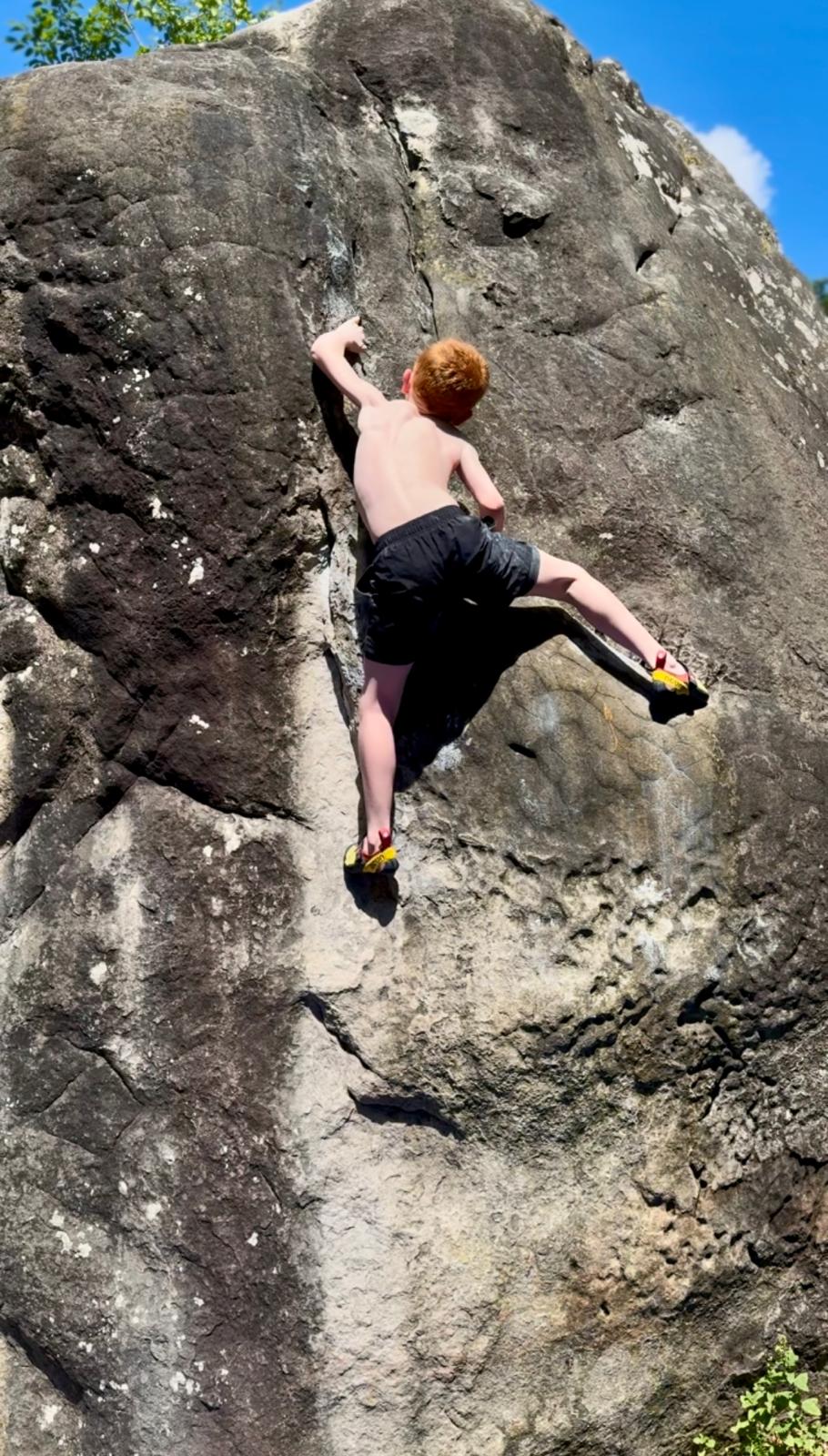
Fontainebleau isn’t just a bouldering area — it’s the birthplace of modern bouldering, a living museum of climbing history, and one of the most culturally significant outdoor playgrounds in the world. Its story stretches back more than a century, shaped by artists, walkers, alpinists, innovators and generations of climbers who turned a quiet French forest into the global epicentre of movement on stone. Today, with more than 30,000 documented problems spread across a sprawling forest just south of Paris, Fontainebleau remains the largest and most developed bouldering area on Earth Veggie Vagabonds.
Below is a deep dive into how this magical place came to be, how it evolved, and why it continues to attract hundreds of thousands of climbers every year.
🌲 Origins: A Forest That Became a Training Ground
Long before climbing gyms, crash pads or topo apps, Fontainebleau was simply a forest — a quiet, painter‑filled landscape of sandstone boulders scattered across soft sand and pine needles. In the late 1800s, members of the Club Alpin Français began using the area as a training ground for alpine expeditions fontainebleaurules.com. What started as conditioning for the mountains soon became an obsession with the boulders themselves.
By 1900, the Club Alpin Français was organising meets specifically around the boulders of Franchard and Apremont, marking the earliest organised climbing activity in the forest Wikipedia.
🧗 The Birth of Bouldering Culture
The turning point came in 1924, when a group of dedicated climbers formed the Groupe de Bleau (GDB) — a collective focused not on summits, but on movement, technique and understanding the rock itself fontainebleaurules.com. Among its most influential members was Pierre Allain, who would later invent the first rubber‑soled climbing shoe, revolutionising the sport forever Wikipedia.
Through the 1930s and 40s, climbers refined techniques, ethics and training methods that would shape the future of climbing worldwide. In 1945, Maurice Martin published the first Fontainebleau guidebook, mapping blocks and routes with names and ratings — a foundational moment in climbing documentation Wikipedia.
🎨 The Circuit System: A Cultural Innovation
One of Fontainebleau’s most iconic contributions to climbing is the painted circuit system. In 1947, Fred Bernick painted the first circuit at Cuvier Rempart, creating a loop of problems designed to simulate alpine endurance and provide structured progression fontainebleaurules.com. Pierre Mercier expanded the system in the 1950s, and by the 1980s, the colour‑coded difficulty system was standardised:
- White – Beginner
- Yellow – Easy
- Orange – Moderate
- Blue – Hard
- Red – Very Difficult
- Black – Extremely Difficult
- White (ED+) – Elite level
These circuits transformed the forest into an open‑air training ground and cultural archive, preserving decades of climbing history in painted arrows and numbers.
📈 Fontainebleau’s Global Rise
By the late 20th century, Fontainebleau had become a pilgrimage site. The invention of the crash pad in the 1990s made highballing safer and attracted climbers from around the world. Hard problems pushed standards higher:
- In 1984, Jacky Godoffe established C’était demain, the first 8A in Fontainebleau Wikipedia.
- In 1998, Cathy Miquel became the first woman to climb an 8A in the forest with The Duel Wikipedia.
Today, Fontainebleau is widely regarded as the Mecca of bouldering, with climbers travelling from every continent to test themselves on its technical slabs, powerful roofs, airy top‑outs and notoriously sandbagged grades.
📊 Usage & Popularity: A Modern Phenomenon
Fontainebleau’s popularity has surged dramatically in the last two decades. While exact annual visitor numbers vary, multiple sources highlight its scale:
- The forest contains over 30,000 documented boulder problems, making it the most extensive bouldering area in the world Veggie Vagabonds.
- It is located just 40 miles south of Paris, making it one of the most accessible major climbing destinations globally Veggie Vagabonds.
- Its reputation as the birthplace of bouldering draws climbers from all over the world, with many sectors — such as Bas Cuvier and Roche aux Sabots — seeing heavy daily traffic during peak seasons boulderflash.com.
The combination of accessibility, history, and sheer volume of problems makes Fontainebleau one of the most visited climbing areas on Earth.
🌍 Environmental Stewardship: A Delicate Ecosystem
Despite its popularity, Fontainebleau remains a fragile environment. The sandstone is soft, the flora delicate, and erosion is a constant concern. Climbers are encouraged to:
- Brush holds
- Stay on marked paths
- Avoid climbing on wet rock
- Carry out all waste
As one historical source notes, “Fontainebleau isn’t a climbing gym… it only takes one careless step to leave a scar that lasts for years” fontainebleaurules.com.
This ethos of care is deeply embedded in the culture of Bleau.
🗺️ The Forest Today: A Living, Breathing Climbing World
Modern Fontainebleau is a vast network of sectors, each with its own character:
- Bas Cuvier – historic, polished, iconic
- Roche aux Sabots – popular, accessible, varied
- Apremont – technical slabs and classics
- Franchard – atmospheric and diverse
- Les Trois Pignons – remote, sandy, beautiful
The forest is managed by the Office National des Forêts, working with local governments and climbers’ federations to preserve access and protect the environment Wikipedia.
📸 A Few Glimpses of Bleau
The images above capture just a fraction of Fontainebleau’s magic — the towering sandstone blocs, the soft forest light, the sandy landings and the climbers who bring the forest to life. From quiet mornings in Trois Pignons to crowded sessions at Cuvier, every corner of Bleau tells a story.
🧭 Why Fontainebleau Still Matters
Fontainebleau isn’t just a climbing destination — it’s the foundation of an entire discipline. It shaped the ethics, techniques, grading systems and culture of bouldering as we know it today. Every climber who visits becomes part of a lineage stretching back more than a century.
It’s a place where:
- History is written in paint and stone
- Movement is studied like an art form
- Community is built around shared struggle
- Nature and culture intertwine
And despite its fame, the forest still holds secrets — quiet sectors, hidden blocs, and problems waiting for the next generation of climbers to discover.